
Messaging app Telegram has taken decisive action against bots that were reported for sharing sensitive data related to Star Health and Allied Insurance Company, and is actively keeping an eye on their re-emergence, a company statement said. "The bots reported to Telegram for sharing Star Health data were immediately removed and moderators are monitoring to prevent them from being recreated. "The sharing of private information on Telegram is expressly forbidden and such content is deleted whenever it is found," the statement said.

Personal data like mobile numbers, PAN, addresses and pre-existing medical conditions of about 3.1 crore customers of Star Health Insurance is allegedly available on a website created by a hacker identified as xenZen. The hacker claimed that Star Health's Chief Information Security Officer (CISO) sold all the data and later tried to change the terms of their deal.

The Chennai-based Star Health and Allied Insurance Co, the country's first stand-alone health insurance company, plans to expand its product basket by launching at least five new products in the next 3-4 months.

Star Health and Allied Insurance's Rs 7,250-crore initial public offering (IPO), the third largest this year and eighth largest ever, just about managed to make it despite a poor response from investors, garnering just 79 per cent subscription, forcing the investment bankers to prune offer for sale (OFS) component. This is the second large offering after digital payments major Paytm this year to receive a lukewarm response from investors, a sign that despite the IPO frenzy investors are discerning when it comes to pricing. As Star Health didn't meet the profitability criteria, its IPO required a mandatory 75 per cent subscription from qualified institutional buyers (QIB).

Even as non-life insurers reported muted premium growth in October, standalone health insurers saw a robust 38 per cent year-on-year (Y-o-Y) surge. This growth was driven by pent-up demand in the retail health insurance segment.

Private equity firm, ICICI Venture, on Thursday said that it plans to invest Rs 120 crore (Rs 1.2 billion) in Star Health and Allied Insurance Company, marking the first private equity deal in the Indian health insurance sector.
India's largest insurer Life Insurance Corporation of India on Monday announced its intention to foray into health insurance sector jointly with another company, which could be a PSU general insurer.

Both the life and non-life insurance segment posted over 20 per cent premium growth in November for the first time in this financial year (FY26), supported by the reduction in goods and services tax (GST) on premiums from 18 per cent to zero and a favourable base effect.
The first private equity deal in the Indian health insurance sector is set to be sealed soon.
State-owned Life Insurance Corporation (LIC) is not keen on a composite license but it is looking to buy less than 50 per cent stake in a standalone health insurance company to enter the health insurance segment such that they have a say in the management of the company, without having to run the company, sources in the know said. "LIC doesn't need a composite licence. "Even if it is introduced, they will not opt for it.
Insurance companies are banking in on health insurance, as it promises to be Rs 25,000-cr industry by 2010.
According to the IRDA's data in 2007-08, the health insurance segment was estimated to be around Rs 5,152 crore, with only 2 per cent of the total population being covered. Realising the potential and advantages -- the segment has been growing at 37 per cent since 2002 -- both life and non-life insurers are offering health insurance products. Health insurance in 2007-08 accounted for 0.2 per cent of the individual regular premium for life insurance companies in India.
Chennai-based Star Health and Allied Insurance has launched Cardiac Care, a unique policy that covers people with heart ailments.

Health insurance claims are often denied due to exclusions in policy terms. Buyers frequently overlook the fine print or misinterpret clauses.

'Try to buy a policy with a lower sum assured or one with a deductible.' 'Those whose spouses work for companies must get themselves enrolled into the employer's group health cover.' 'Some public sector banks also offer group health covers to those who open a savings account with them.'

New India Assurance and Niva Bupa have invested in the Bima Sugam India Federation.

Many high-profile IPOs in India since 2021 have destroyed investor wealth due to overvaluation, weak business models, and post-listing disinterest, turning 1 lakh investments into as little as 3,500.
General insurance industry grew by 21 per cent in April-May, which saw private player ICICI Lombard fast catching up with the top four public sector insurers.

While Star Health's policy for children is a step forward, it has a low sum insured and comes as a group cover.

Some of the key names include: Maruti, M&M, Ashok Leyland, Britannia, Ultratech, JK Cement, Havells, Voltas, Amber, Metro, Trent, LemonTree, Indian Hotels, Niva Bupa, HDFC Life, IGL, Acme Solar, Suzlon, Swiggy, Delhivery, ICICI Bank, HDFC Bank, Bajaj Finance, Shriram Finance," according to a report by Motilal Oswal Financial Services.

To avoid a claim rejection for chronic diseases, ensure proper medical records, experts tell Tinesh Bhasin
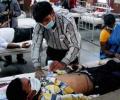
As a result of the mass state-led scheme, the processes in the health insurance market could get simplified over time and become uniform

There are few lapses in the healthy insurance proposals.

After the Delhi high court's ruling, blanket exclusion of genetic disorders from coverage is likely to become a thing of the past.
A number of insurers offer health policies designed especially for senior citizens.

Bharti will move FIPB soon for increasing Axa's stake to 49%

Insurance experts said since it may be difficult to set a tariff or fixed rates for Covid-19 treatment, an indicative rate chart has been proposed.

'A policy that covers a wider range of diseases will offer greater peace of mind.'

'While many policies say that they will cover mental illnesses, the wordings of a few still have mental illness as a permanent exclusion.' 'After the new IRDAI circular, such exclusions should go away.'

'Retail investors, who had not seen such a massive correction in the SMID universe since COVID-19, are witnessing something like this for the first time. Panic profit booking may continue.'

Apart from rail mishaps, the coverage would take care of terrorist attacks and accidental fall of a passenger from a train and normal accidents, riots, robbery and dacoity

Nearly 90 per cent of the stocks comprising the National Stock Exchange Nifty 500 Index and 49 of the 50 stocks that make up the Nifty50 are trading above their respective 200-day moving averages (DMAs). The 200-DMA is considered one of the most relevant trend indicators by investors and traders. They believe that stocks and indices trading above this key level exhibit strength and are likely to rally, while those trading below this level are viewed as bearish, with the stock/index expected to see a selloff.

Ensure that you get a high sum insured. Also, make sure the policy covers the cost of implants (pacemaker, stent, etc), and pre and post-hospitalisation expenses.

Start-ups Zomato, PB Fintech, One97 Communications, and FSN E-Commerce Ventures have entered the large-cap category after the latest reclassification exercise by the Association of Mutual funds in India (Amfi). This comes despite stocks such as PB Fintech (Policybazaar) and One 97 Communication (Paytm) trading below their issue price. Others such as Mindtree, SRF, IRCTC, Tata Power, JSW Energy have been moved from mid-cap to large-cap category.

The IPO lane will continue to be busy in December as 10 companies have lined up initial share-sale plans worth more than Rs 10,000 crore, merchant banking sources said on Wednesday. Moreover, the initial public offerings of Star Health and Allied Insurance and Tega Industries are currently open for public subscription. This comes after 10 firms successfully concluded their initial public offerings (IPOs) in November. Among the companies that scheduled their IPOs in this month include RateGain Travel Technologies, travel and hospitality technology services provider, and Anand Rathi Wealth Ltd, part of Mumbai-based financial services group Anand Rathi.
Instead of enhancing the sum insured of your basic policy, a more cost-effective option is buying a super top-up policy.

The primary market is set for a bumper Rs 80,000-crore bonanza with 30 companies already filing IPO papers to raise Rs 55,000 crore, while around 10 more are lined up for this month itself, seeking to mop up another Rs 25,000 crore, say investment bankers. The market has been on a non-stop rally, hitting new records almost every week, on the back of an influx of investors -- a vast majority of them first-timers -- coupled with a flood of liquidity. Foreign funds alone had pumped in a record $35 billion into the market in FY21, while the trend has continued this fiscal as well. Domestic institutions led by LIC have also infused trillions of rupees, helping woo retail investors in troves -- the year saw over 20 million new investors coming to the market.

Will appeasement, rising unemployment and her dictatorial style become major obstacles in her path? asks Payal Singh Mohanka.
